
What matters when choosing the classic slot
Fixed lines favour a familiar layout; tablet upgrades add progression during free spins. The choice starts with how you prefer to follow a result.
A stable base game with a visible feature#
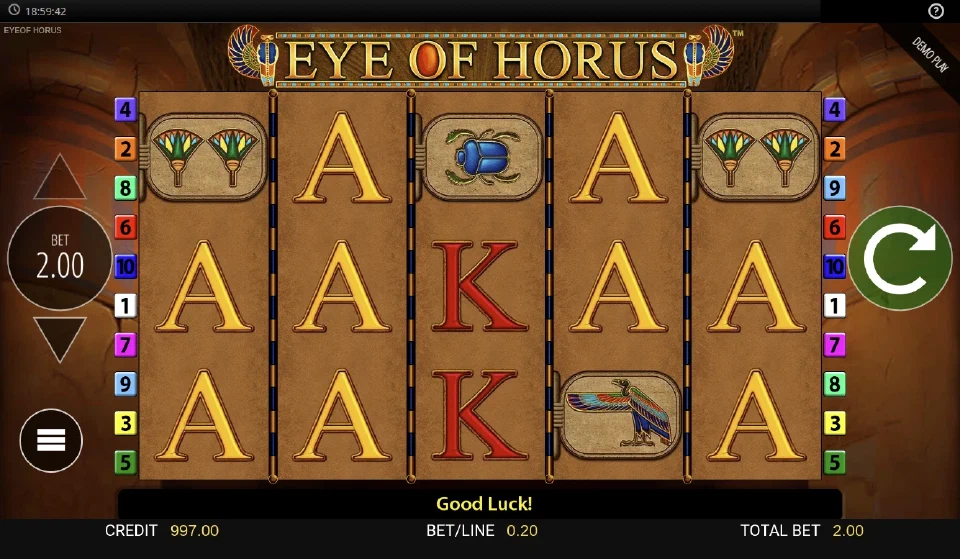
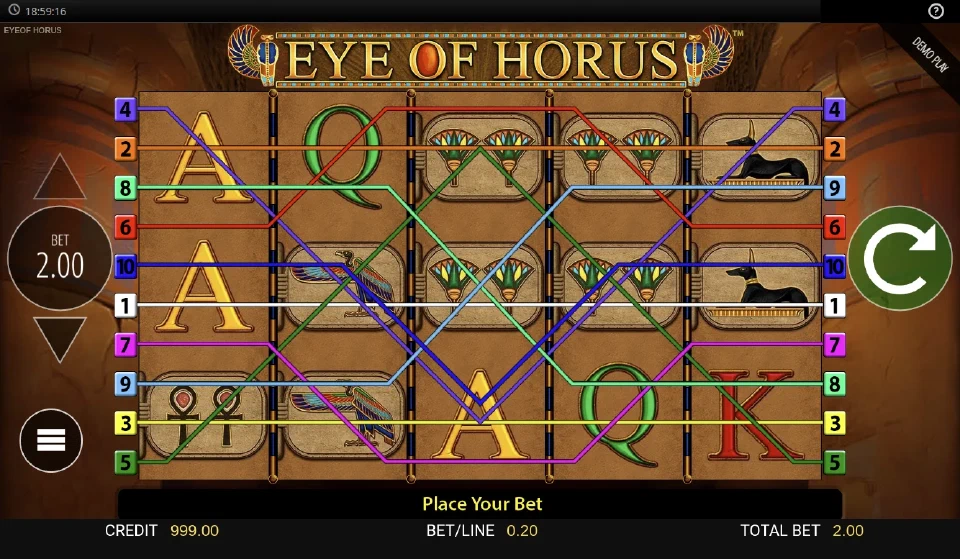
The classic Eye of Horus has a clear division between its normal spins and free-spin progression. The base game keeps five reels and three rows, with ten lines always active. Horus creates a large visual change when it expands, but the underlying winning paths remain the same. That consistency is the game’s strongest point for a player learning to read slot results.
During free spins, the tablet sequence adds a second layer. Lower premium symbols move through an ordered progression toward higher-paying symbols. Horus also adds spins, so a single appearance can affect both what the reels contain and how long the feature continues. The interest comes from following those changes as the round develops.
Why fixed lines can be a useful starting point#
A winning line needs three, four or five matching symbols on consecutive reels from the left. The game highlights a paid line after the reels stop. This gives a new player a concrete way to connect the visible result with the rules: trace the line, count the matching symbols and compare the paytable row.
An expanded wild fills its reel, so several lines can use it. Wins from different lines are added, while each individual line pays its highest winning combination. Scatter awards follow a separate rule and join the total. The complete classic rules explain that settlement in more detail.
For someone who enjoys a familiar layout, these fixed paths are a reason to choose the original game. A player who prefers changing reel arrangements may find Megaways a closer match. These are differences in game structure and taste; the name or visual scale of a mechanic alone says little about a particular session’s result.
The decisions you actually make#
Your main choices are the game edition, its available total stake and the length of your session. The operator’s currency and configuration determine the available stake list. Choose a total bet that fits the amount you intend to spend, then use that same cost when reading the paytable and balance changes.
If autoplay appears in your chosen version, its availability and settings follow the operator and jurisdiction. Read the count and stopping controls before using it. The classic rules describe a stop at bonus rounds and at a selected loss limit, alongside the manual Stop control. Those controls automate a sequence of bets; the game’s line and feature rules still apply.
Read RTP alongside the edition name#
A classic Blueprint setting has a theoretical RTP of 96.31%. Other classic settings exist, so the percentage in the selected game is the relevant one for a comparison. A short winning or losing session is a separate observation from that long-run figure.
The RTP comparison lists named classic and Megaways settings. It also separates jackpot contributions from base-game percentages. This is particularly useful when two similarly named titles appear together in a lobby.
Our game-choice conclusion#
Start with the classic free play and trace a highlighted line before comparing formats. Choose the original for fixed paths or Megaways for a changing ways count, then compare the selected game’s RTP and stake options through the partner selection.